405,943 views on our MCAT reels in the last 30 days · 104,657 on one Krebs cycle reel (Instagram insights, Oct 3 – Nov 2, 2026). Watch it →
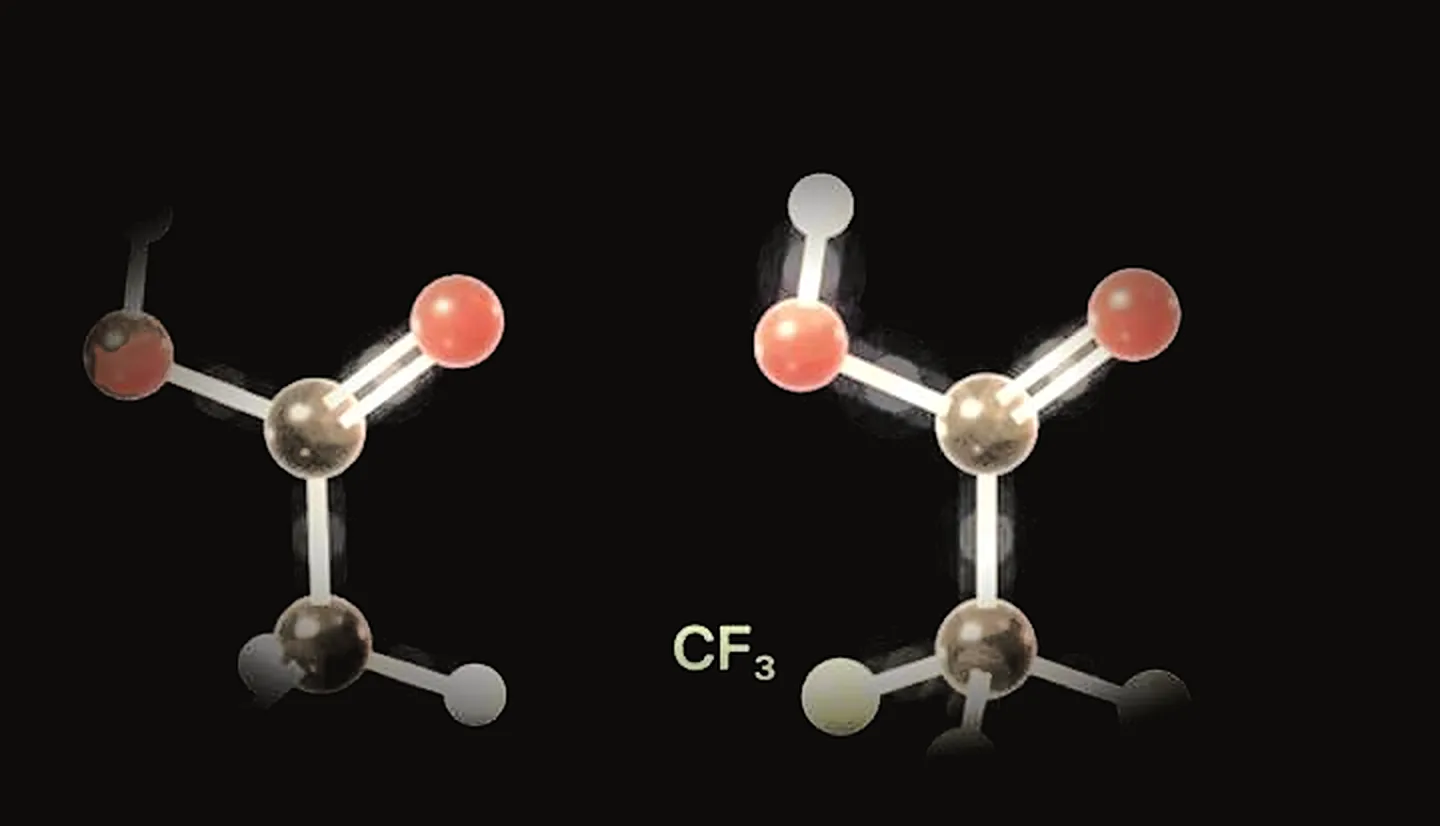
Three fluorines make acetic acid about 34,000 times more acidic.
The pKa falls from 4.76 to 0.23: 4.53 units, so about 104.5. Each fluorine pulls charge away from the carboxylate, and the pulls add up, until the acid is almost fully ionized in water.
Ammonium chloride dissolves completely in water. What is the pH of a 0.10 M NH₄Cl solution at 25 °C? (Kb of NH₃ = 1.8 × 10⁻⁵; Kw = 1.0 × 10⁻¹⁴)
Pick one. The red pen does the rest.
The deciding lineFor a conjugate acid–base pair in water, Ka × Kb = Kw.
Why B: NH₄+ is the conjugate acid of NH₃, so Ka = 1.0 × 10⁻¹⁴ ÷ 1.8 × 10−5 = 5.6 × 10⁻¹⁰. [H+] = √(5.6 × 10−10 × 0.10) = 7.5 × 10⁻⁶ M, so pH = 5.13; Cl−, the conjugate base of a strong acid, does not change the pH.
Why each choice fails
ALook-alike terms: 2.87 uses Kb of NH₃ as though it were Ka of NH₄+; Ka = Kw/Kb = 5.6 × 10⁻¹⁰ is far smaller, so the solution is only mildly acidic.
CConditions ignored: a salt gives a neutral solution only when neither ion reacts with water; NH₄+ is a weak acid (Ka = 5.6 × 10⁻¹⁰), so the solution is acidic.
DDirection reversed: 8.87 = 14 − 5.13 treats 7.5 × 10⁻⁶ M as [OH−]; NH₄+ donates protons to water, so it raises [H+] and the pH falls below 7.
If it isn’t helping, reply to your receipt email, or DM @redpenprep on Instagram within 30 days and get every dollar back. No questions asked. Email support