54 lessons. 30 seconds each.
The MCAT, made visible: every lesson in one place. Each one is built on a number you won’t forget and the trap that costs points. Watch one, then check yourself.
Acid series 7
Orgo and Chem/Phys. Seven parts, from one O–H bond to a titration curve.
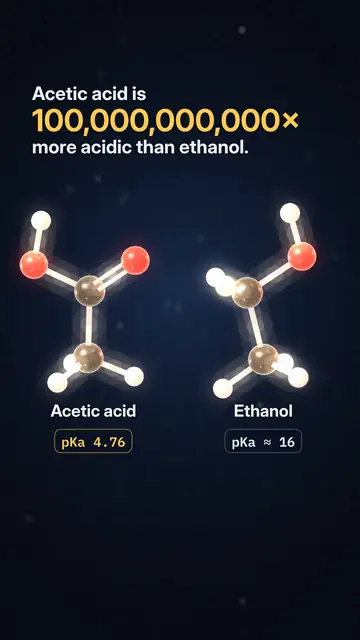 Part 1Acetic acid is about 100 billion times more acidic than ethanol.Trap: it’s not the O–H bond. It’s the ion left behind.Watch · 30 s
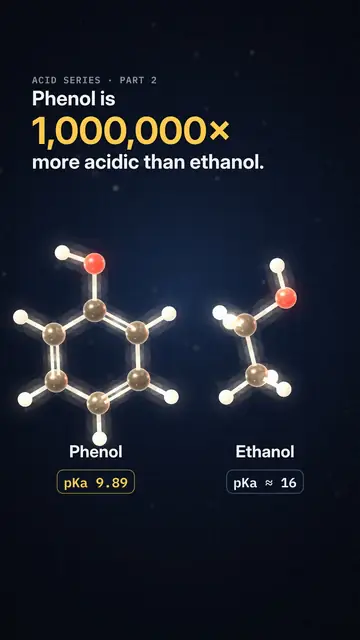 Part 2Phenol is about a million times more acidic than ethanol (pKa 9.89 vs 16).Trap: phenoxide spreads its charge into the ring (ortho and para, never meta).Watch · 30 s
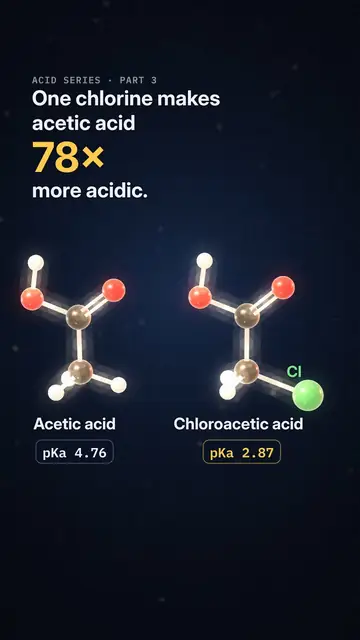 Part 3One chlorine makes acetic acid almost 80 times more acidic (4.76 → 2.87).Trap: the inductive pull fades fast with distance.Watch · 30 s
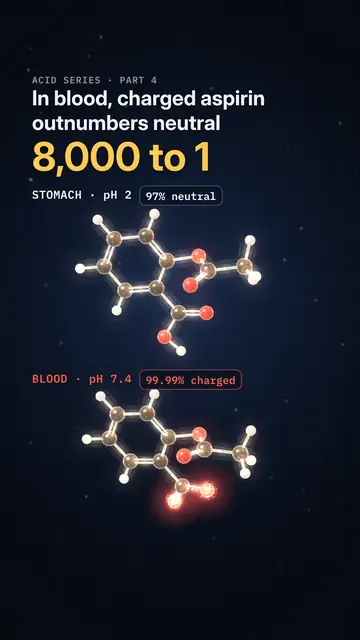 Part 4In your blood, charged aspirin outnumbers neutral aspirin about 8,000 to 1.Trap: only the neutral form crosses membranes.Watch · 30 s
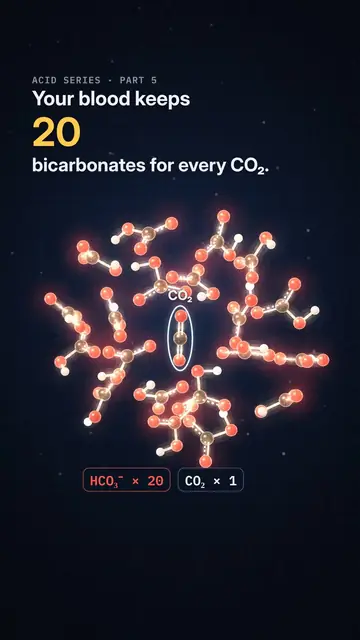 Part 5Your blood keeps about 20 bicarbonates for every CO₂ (pKa 6.1, pH 7.4).Trap: each pH unit above the pKa means 10× more base.Watch · 30 s
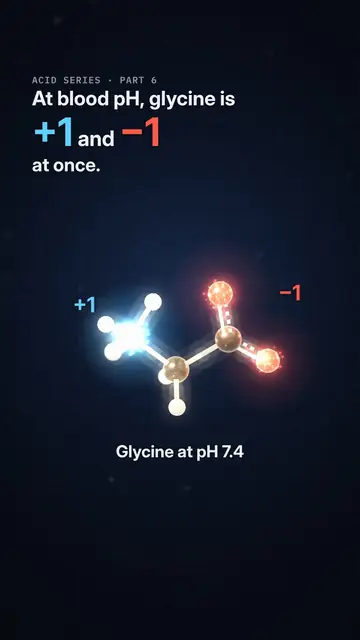 Part 6At blood pH, glycine is +1 and −1 at the same time. Net charge: zero.Trap: each group follows its own pKa.Watch · 30 s
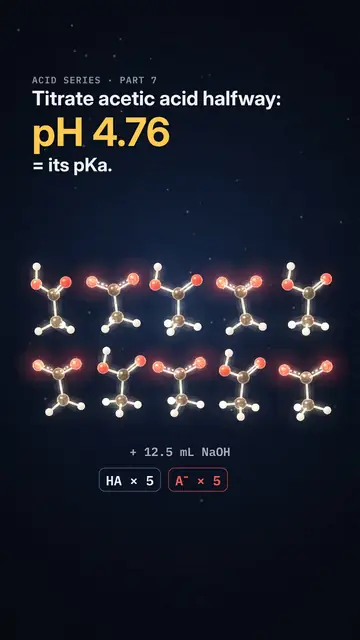 Part 7Titrate acetic acid halfway and the pH reads 4.76, exactly its pKa.Trap: concentration doesn’t move the half-equivalence point.Watch · 30 s
Practice it in the course
- Titration of two candidate buffering agentsChem/Phys passage K001 · 5 questions · sample
- Separating an acid, a phenol and a hydrocarbon by extractionChem/Phys passage K008 · 5 questions · with the Pass
- Buffers, titrations and electron bookkeepingChem/Phys question set J017 · 5 questions · with the Pass
- Charge variants of a small protein in native gels and isoelectric focusingBio/Biochem passage B002 · 5 questions · with the Pass
- Carbonic anhydrase and the speed of CO₂ exchange in bloodBio/Biochem passage B018 · 5 questions · with the Pass
In the course, 10 passages and sets open with one of these lessons.
Enzyme series 3
Biochem. What an enzyme can and cannot change.
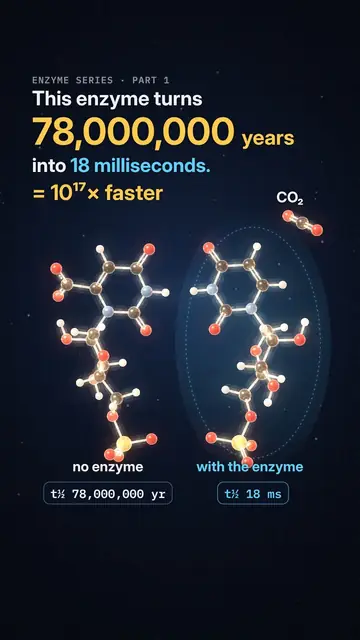 Part 1NewThis enzyme turns 78 million years into 18 milliseconds: about 10¹⁷× faster.Trap: an enzyme lowers Ea. It does not change ΔG or the equilibrium.Watch · 30 s
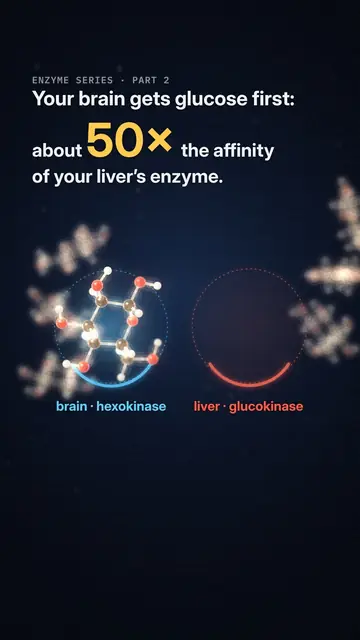 Part 2Your brain gets glucose first: about 50× the affinity of your liver’s enzyme.Trap: Km is the [S] that gives half of Vmax, not half of Vmax.Coming this week
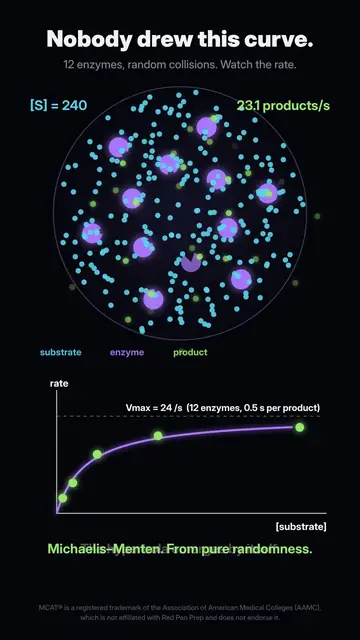 SimulationTwelve enzymes, random collisions: the Michaelis–Menten curve draws itself.Trap: Vmax is a ceiling set by how much enzyme there is, not by substrate.Watch · 30 s Competitive?3D questionMalonate inhibits succinate dehydrogenase. Competitive or noncompetitive?Trap: It mimics succinate: competitive, so Km rises and Vmax stays.Watch · 30 s
Practice it in the course
- Michaelis–Menten kinetics, inhibition and the Lineweaver–Burk plotBio/Biochem question set D021 · 5 questions · with the Pass
- Two reversible inhibitors of a bacterial esteraseBio/Biochem passage B001 · 5 questions · with the Pass
- Substrate binding and catalysis in alanine mutants of a bacterial hydrolaseBio/Biochem passage B041 · 5 questions · with the Pass
- Cholesterol synthesis, statins and the SREBP feedback loopBio/Biochem passage B057 · 5 questions · with the Pass
- Inhibitors, isoelectric points and coupled reactionsChem/Phys question set J027 · 5 questions · with the Pass
In the course, 5 passages and sets open with one of these lessons.
Speedruns 10
Bio/Biochem. Whole pathways in seconds, in order.
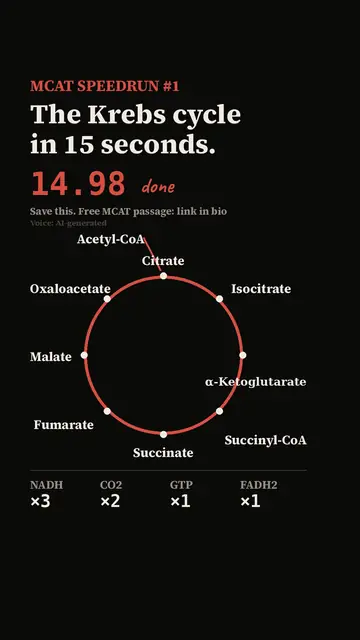 #1The entire Krebs cycle. Per turn: 3 NADH, 1 FADH₂, 1 GTP, 2 CO₂.Trap: one of the eight intermediates still carries CoA.Watch · 30 s
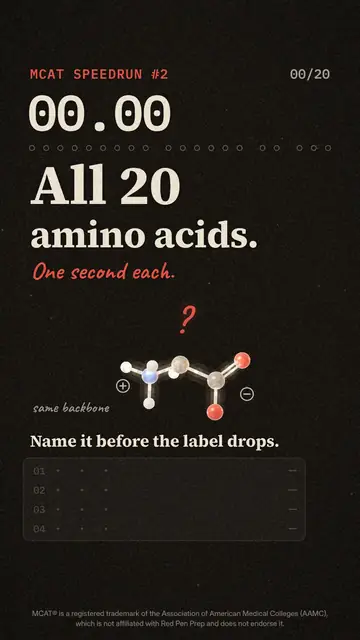 #2All 20 amino acids, named and grouped.Trap: “polar” and “charged” are not the same group.Watch · 30 s
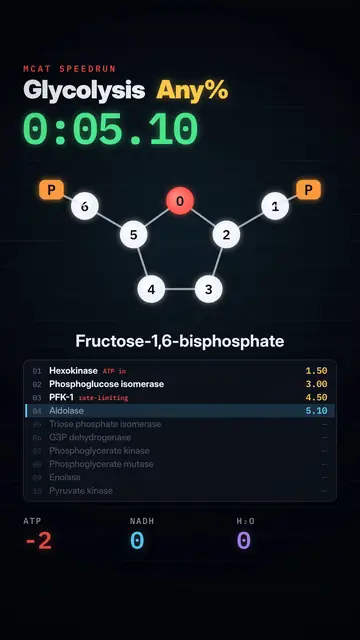 Glycolysis: all 10 enzymes, in order.Trap: three steps are irreversible, and gluconeogenesis has to bypass them.Watch · 30 s
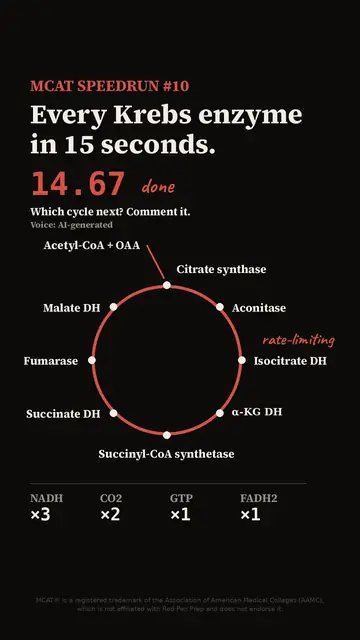 Every Krebs cycle enzyme, in one run.Trap: succinyl-CoA synthetase makes GTP, not ATP, in most textbooks.Watch · 30 s
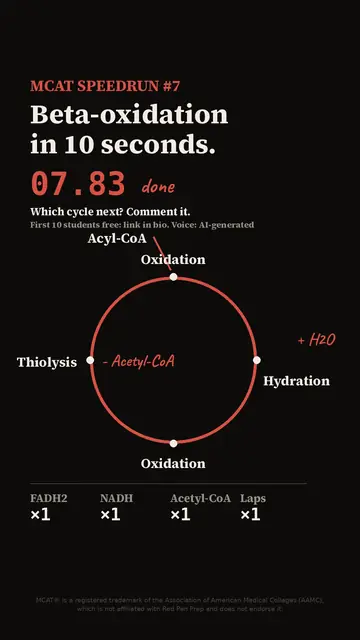 #7Beta-oxidation, step by step.Trap: each round cuts off two carbons as acetyl-CoA.Watch · 30 s
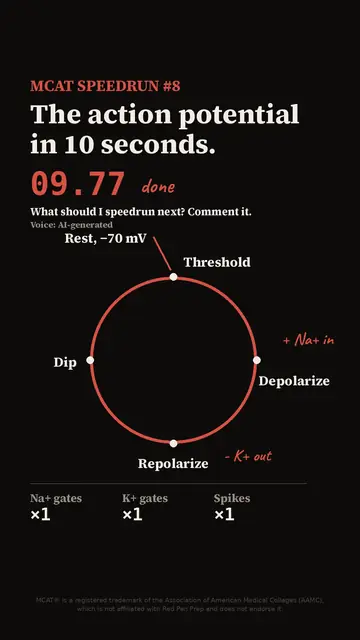 #8The action potential.Trap: the peak stops when Na⁺ channels inactivate, not when they “run out”.Watch · 30 s
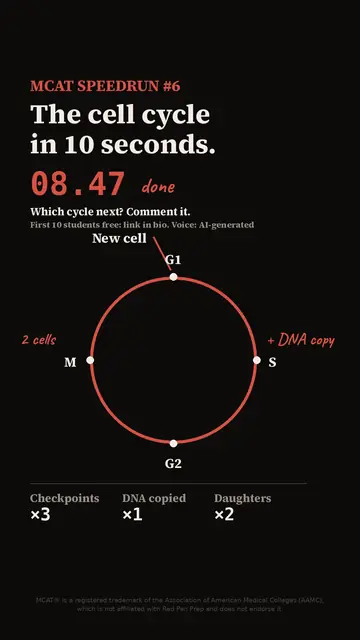 #6The cell cycle.Trap: DNA is copied in S phase, not in mitosis.Watch · 30 s
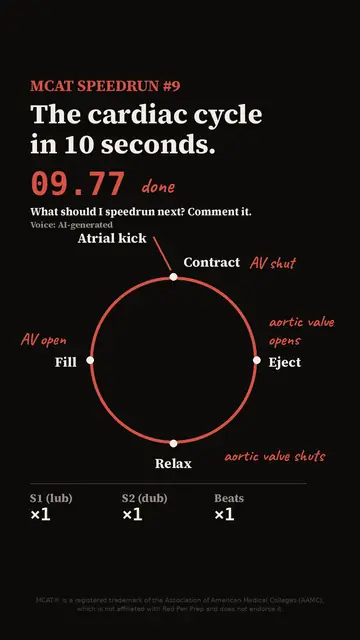 The cardiac cycle.Trap: heart sounds come from valves closing.Watch · 30 s
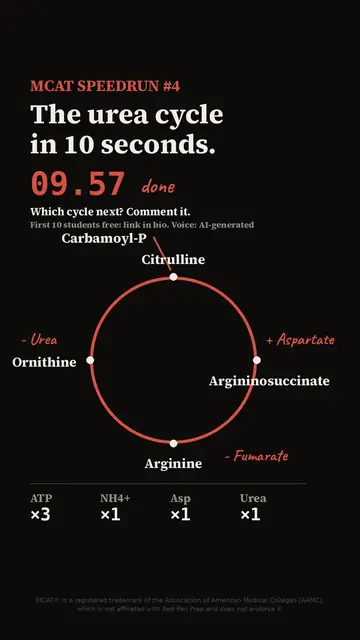 #4The urea cycle, step by step.Trap: Part of it runs in the mitochondria, part in the cytosol.Watch · 30 s
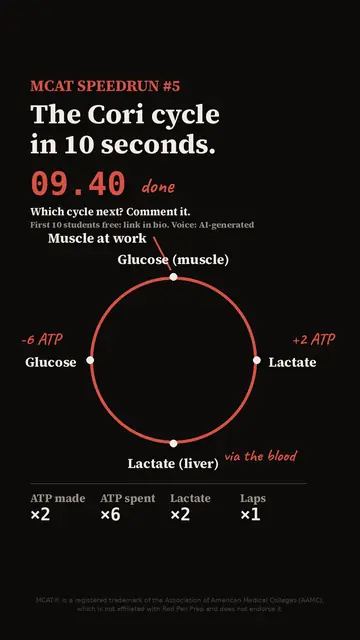 #5The Cori cycle.Trap: Lactate goes to the liver; glucose comes back to the muscle.Watch · 30 s
Practice it in the course
- Fatty-acid oxidation and the carnitine shuttleBio/Biochem passage B014 · 5 questions · with the Pass
- Enzymes, coupling and fuel choiceBio/Biochem question set D013 · 5 questions · with the Pass
- Cell cycle control, tumor suppressors and pluripotencyBio/Biochem question set D011 · 5 questions · with the Pass
- Signals that converge on PFK-1Bio/Biochem passage B003 · 5 questions · with the Pass
- Respiratory control in liver mitochondriaBio/Biochem passage B004 · 5 questions · with the Pass
In the course, 19 passages and sets open with one of these lessons.
Physiology & neuro 13
Bio/Biochem and Psych/Soc foundations, in living 3D.
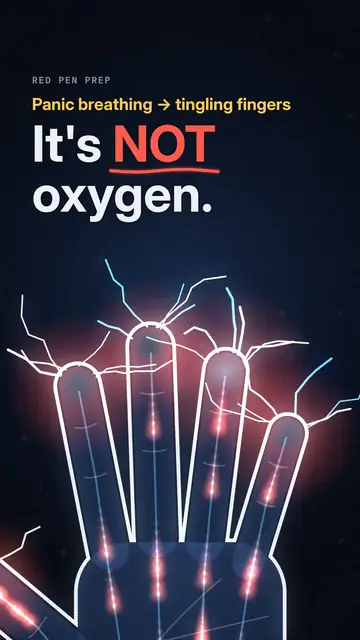 Panic breathing makes your fingers tingle. It’s not a lack of oxygen.Trap: fast breathing raises pH, and ionized Ca²⁺ falls.Watch · 30 s
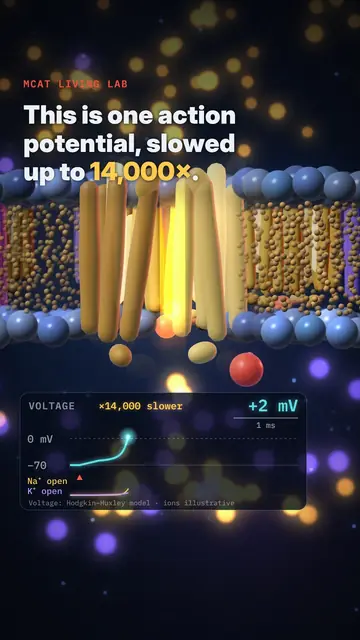 Living Lab #1What stops the rise at the peak of an action potential?Trap: Na⁺ channels inactivate as K⁺ channels open.Watch · 30 s
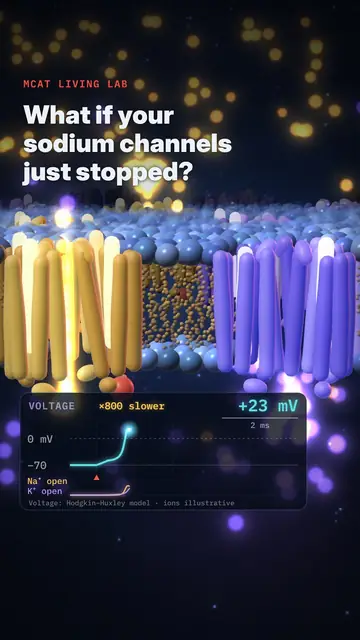 Living Lab #2This pufferfish poison stops your nerves from firing.Trap: it blocks Na⁺ channels, so no action potential at all.Watch · 30 s −70 mVThis is what a thought is made of: one neuron firing.Trap: threshold is all-or-none; bigger stimuli fire more often, not bigger.Watch · 30 s
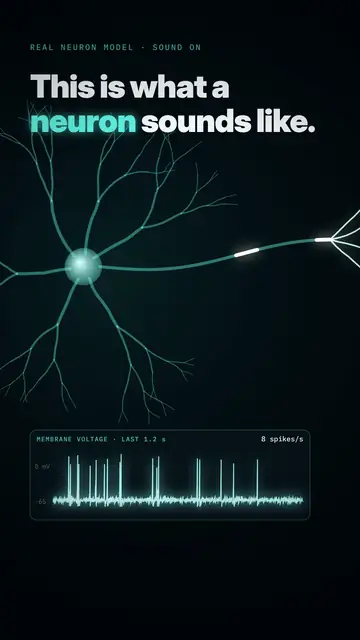 This is what a neuron sounds like.Trap: a stronger stimulus means more clicks (spikes), not bigger ones.Watch · 30 s Steroid or peptide?3D questionCortisol or oxytocin: which crosses a cell membrane on its own?Trap: Steroids cross; peptide hormones need a receptor on the surface.Watch · 30 s
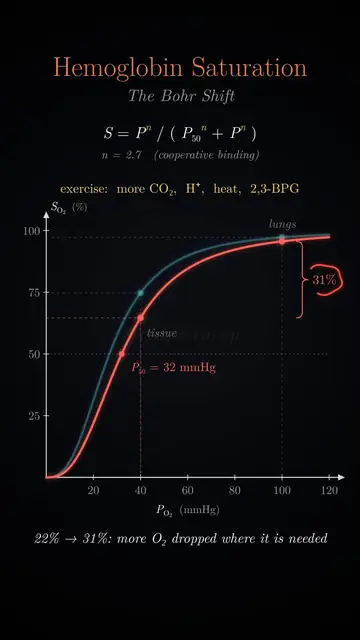 PhysiologyExercise doesn’t make hemoglobin weaker. It makes it smarter.Trap: CO₂, H⁺, heat and 2,3-BPG shift the curve right.Watch · 30 s
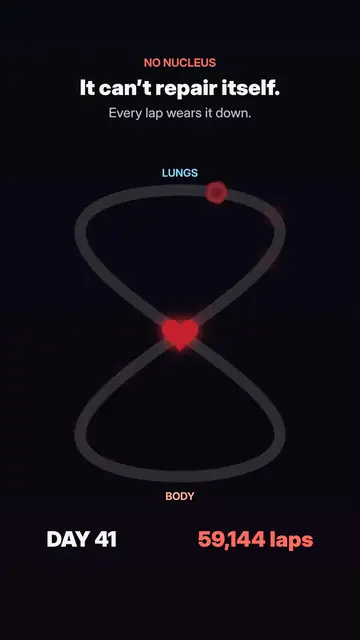 PhysiologyThe life of one red blood cell, in 30 seconds.Trap: No nucleus, so it can’t repair itself.Watch · 30 s
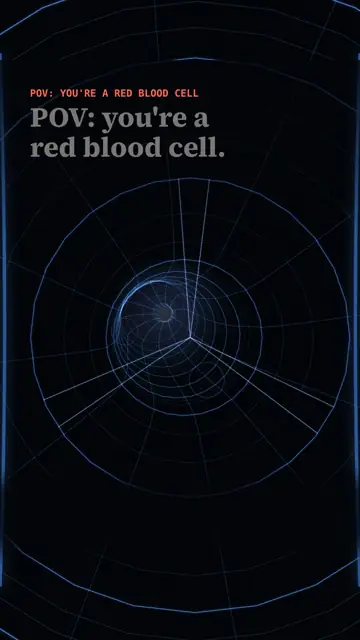 POVPOV: you’re a red blood cell. One lap of your body.Trap: Saturation climbs from about 75% to 98% in the lungs.Watch · 30 s
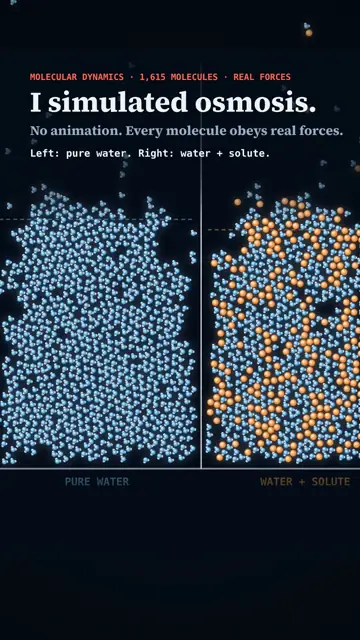 SimulationOsmosis, simulated: 1,615 molecules, real forces.Trap: Nobody pushes the water: it moves toward more solute.Watch · 30 s FLAT PEGMemoryThe anterior pituitary hormones, in two words.Trap: FLAT are tropic; PEG act directly.Watch · 30 s Low T4, low TSHCaseLow thyroid hormone and low TSH: which patient has the pituitary mass?Trap: The TRH test settles it.Watch · 30 s
 PerceptionStare at the dot: your brain paints a red heart that was never there.Trap: Opponent process: tired cyan cells leave red behind.Watch · 30 s
Practice it in the course
- Cholera toxin and β2-adrenergic cAMP signalingBio/Biochem passage B007 · 5 questions · sample
- Channel blockers, myelin and conduction velocityBio/Biochem passage B016 · 5 questions · with the Pass
- Graded K⁺ channel expression and the resting potentialBio/Biochem passage B048 · 5 questions · with the Pass
- CO₂, ventilation and pH at sea level and at altitudeBio/Biochem passage B036 · 5 questions · with the Pass
- Ouabain, cold and cell volumeBio/Biochem passage B008 · 5 questions · with the Pass
In the course, 22 passages and sets open with one of these lessons.
Orgo in 3D 10
Chem/Phys. Pick your answer before the reveal.
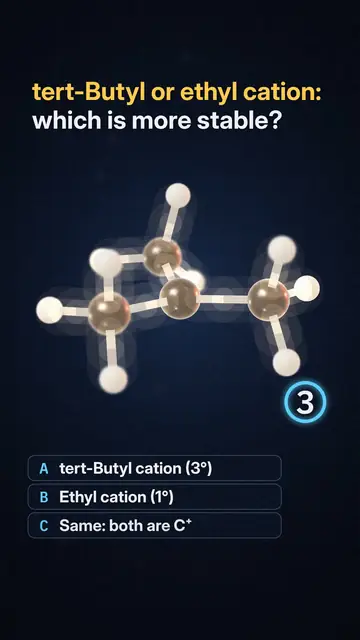 tert-Butyl or ethyl cation: which is more stable?Trap: more alkyl groups donate more electron density.Watch · 30 s
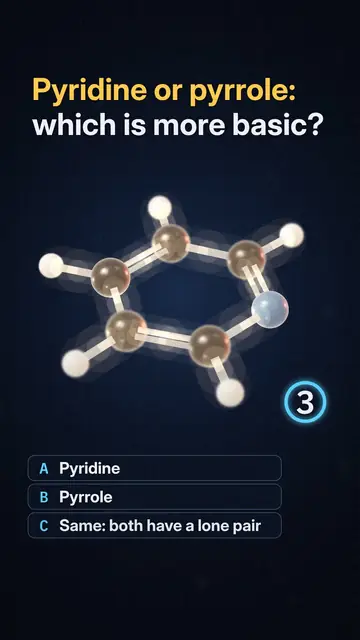 Pyridine or pyrrole: which is more basic?Trap: pyrrole’s lone pair is part of the aromatic ring.Watch · 30 s
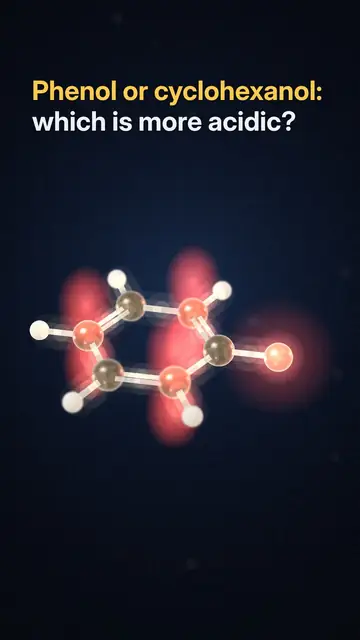 Phenol or cyclohexanol: which is more acidic?Trap: only phenol’s ring can share the charge.Watch · 30 s
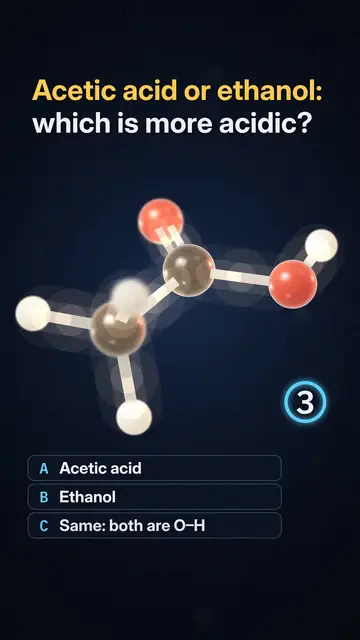 3D questionAcetic acid or ethanol: which is more acidic?Trap: The conjugate base decides it, not the O–H bond.Watch · 30 s
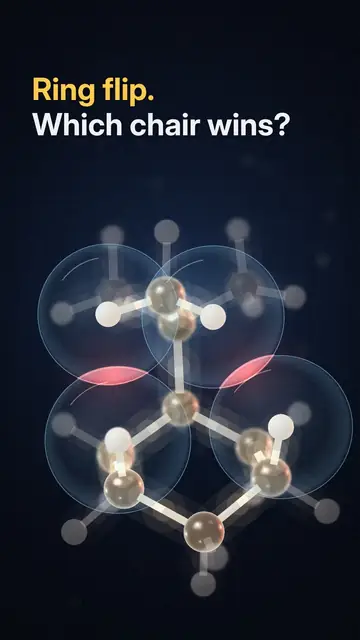 3D questionRing flip: which chair wins?Trap: Big groups go equatorial, and the flip moves them.Watch · 30 s
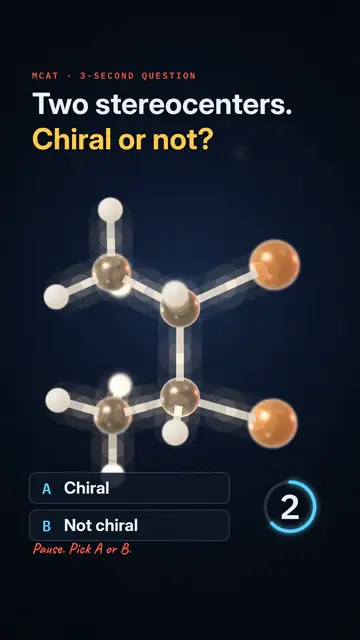 3-second questionTwo stereocenters. Chiral or not?Trap: Stereocenters don’t guarantee chirality: look for a mirror plane.Watch · 30 s E or Z?3D questionBoth methyls on the same side of the C=C. E or Z?Trap: Rank by priority: Br outranks CH₃, so it is E.Watch · 30 s (2R,3S)3D question(2R,3S)-2,3-dibromobutane: does it rotate plane-polarized light?Trap: It is meso: no rotation.Watch · 30 s
Practice it in the course
- Lipophilicity and permeability of five drug candidatesChem/Phys passage K059 · 5 questions · with the Pass
- Charges, stereoisomers and reactive partnersChem/Phys question set J014 · 5 questions · with the Pass
- Formal charges, resonance and unpaired electronsChem/Phys question set J021 · 5 questions · with the Pass
- Functional groups and their reactionsChem/Phys question set J003 · 5 questions · with the Pass
- Reactions of oxygen-containing organic compoundsChem/Phys question set J010 · 5 questions · with the Pass
In the course, 12 passages and sets open with one of these lessons.
Physics, made visible 11
Chem/Phys. Predict it before the reveal, then see why.
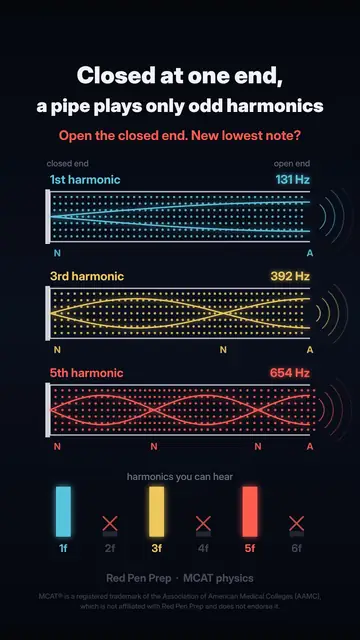 Sound onA pipe closed at one end plays only odd harmonics.Trap: No even harmonics in a closed pipe.Watch · 30 s
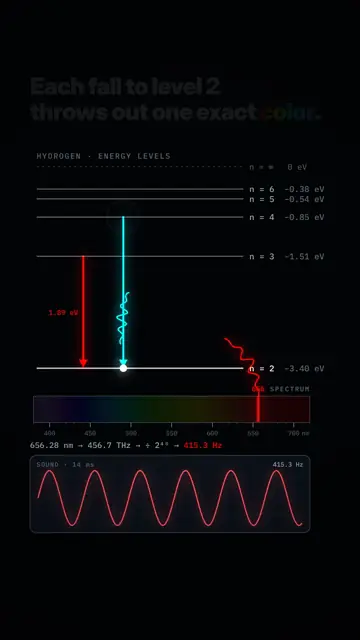 Sound onEvery element glows in its own exact colors: its emission lines.Trap: Each line is one electron jump between levels.Watch · 30 s 60°Predict itA laser in water hits the surface at 60°. Escape or bounce back?Trap: Past the critical angle, about 49°, it reflects totally.Watch · 30 s
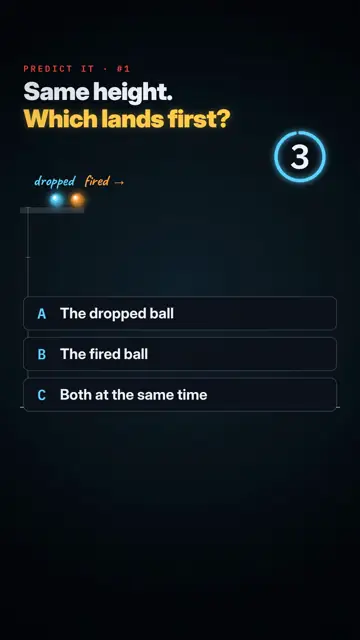 Predict itOne ball dropped, one fired sideways. Which lands first?Trap: A tie: horizontal speed doesn’t change the fall.Watch · 30 s a = 0?Predict itAt the very top of its flight, is the ball’s acceleration zero, or g?Trap: Velocity is zero; acceleration is still g.Watch · 30 s Heavy or light?Predict itHeavy bob or light bob: which pendulum swings faster?Trap: Neither: the period depends on length, not mass.Watch · 30 s 8, 50 or 92%?Predict itHow much of a floating ice cube is underwater?Trap: The density ratio decides it: about 92%.Watch · 30 s Ball or feather?Predict itIn a vacuum, a heavy ball or a feather: which lands first?Trap: A tie: without air, mass doesn’t matter.Watch · 30 s
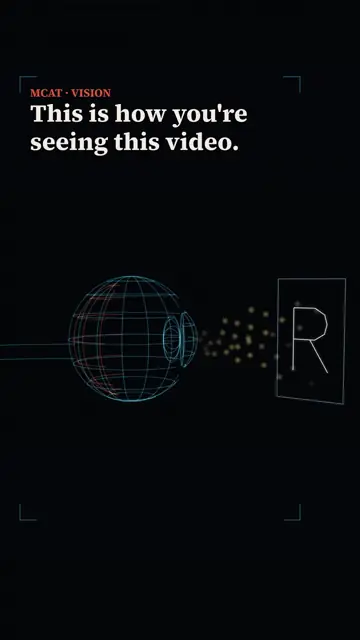 VisionThis is how you’re seeing this video.Trap: Cornea and lens land the image upside down on the retina.Watch · 30 s
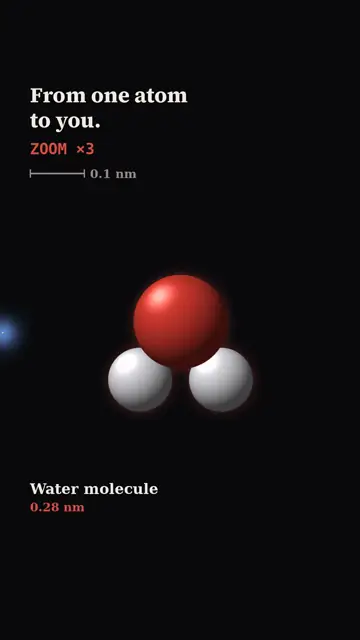 ScaleFrom one hydrogen atom to the human eye, every size to scale.Watch · 30 s
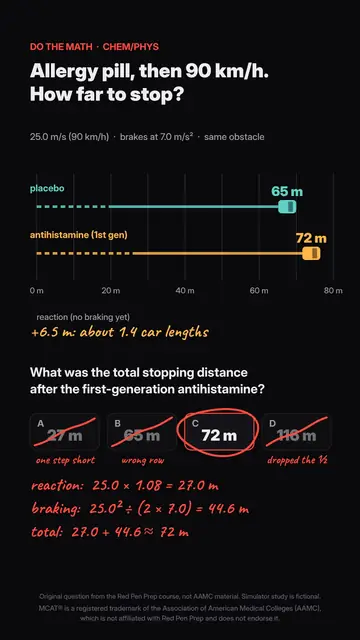 Do the mathAllergy pill, then 90 km/h: how much longer to stop?Trap: Reaction distance grows with reaction time; braking distance doesn’t.Watch · 30 s
Practice it in the course
- Antihistamines, reaction time and stopping distanceChem/Phys passage K050 · 5 questions · with the Pass
- Measuring hydrogen’s lines with a diffraction gratingChem/Phys passage K041 · 5 questions · with the Pass
- Testing Doppler ultrasound with a string phantomChem/Phys passage K012 · 5 questions · with the Pass
- The dark current and the light response of salamander rodsBio/Biochem passage B045 · 5 questions · with the Pass
- Kinematics, forces and energyChem/Phys question set J005 · 5 questions · with the Pass
In the course, 15 passages and sets open with one of these lessons.
When you want the full course
3,122 MCAT questions. Every wrong answer named, and corrected in red.
- All four sections with full passages and their tables
- 11 full-length exams in test-day order
- Every lesson built in: 83 passages open with their 30-second lesson
- The Trap Bank: 155 drills on the traps that cost the most points
- Every miss comes back 1, 3 and 7 days later, until it sticks
$299until Nov 30 · $600 from Dec 1
Founding price until November 30, then $600.
30-day full refund, no questions asked.