405,943 views on our MCAT reels in the last 30 days · 104,657 on one Krebs cycle reel (Instagram insights, Oct 3 – Nov 2, 2026). Watch it →
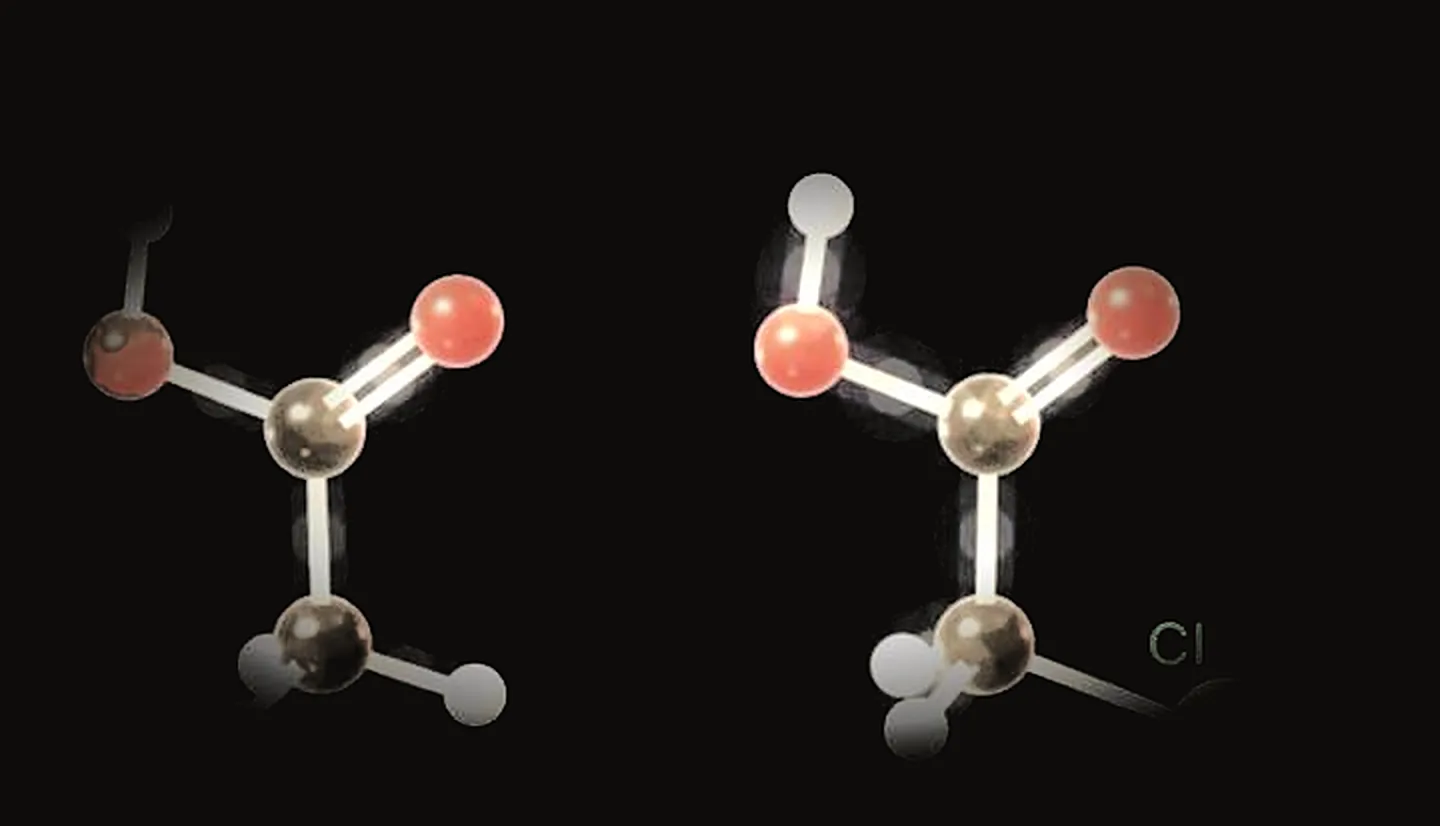
Chloroacetic acid is 78× more acidic than acetic acid. One chlorine does it.
The pKa falls from 4.76 to 2.87. Chlorine pulls electron density through the bonds and steadies the carboxylate. One pKa unit is a factor of 10, so 1.89 units is about 78×.
The pKa values of butanoic acid and three of its monochloro derivatives in water at 25 °C are: butanoic acid, 4.82; 4-chlorobutanoic acid, 4.52; 3-chlorobutanoic acid, 4.05; and 2-chlorobutanoic acid, 2.86. Which conclusion do these data best support?
Pick one. The red pen does the rest.
The deciding lineAn electronegative substituent strengthens a carboxylic acid by withdrawing electron density through σ bonds (an inductive effect), which stabilizes the carboxylate ion; the effect weakens rapidly with each bond between the substituent and the carboxyl group.
Why A: Chlorine lowers the pKa by 4.82 − 2.86 = 1.96 units at C2, by 4.82 − 4.05 = 0.77 at C3 and by 4.82 − 4.52 = 0.30 at C4. The acid is stronger at every position, and the effect shrinks to about 0.4 of its size with each additional bond, the signature of an inductive effect carried through σ bonds that stabilizes the carboxylate ion.
Why each choice fails
AHolds: the pKa falls by 1.96 (C2), 0.77 (C3) and 0.30 (C4) units, about 0.4 as much with each bond added; electron withdrawal through σ bonds stabilizes the carboxylate and weakens with distance.
BRight effect, wrong mechanism: chlorine does strengthen the acid, but by withdrawing electron density through σ bonds; its lone pairs sit on an sp3 carbon, not conjugated with the carboxylate, and donating electron density would destabilize the anion and weaken the acid.
CScale slip: 1.7 is the ratio of the pKa values, 4.82/2.86; pKa is a negative logarithm, so Ka rises 10^(4.82 − 2.86) = 10^1.96 ≈ 91-fold.
DSays more than the data: only chlorine was tested, and other atoms shift the pKa by different amounts; an OH at C2, for example, lowers the pKa of acetic acid (4.76) only to about 3.8 (glycolic acid).
Acetyl chloride is hydrolyzed by water within seconds at 25 °C, whereas acetamide is hydrolyzed only after hours of heating with strong acid or base. Which factor best accounts for acetamide's lower reactivity?
Pick one. The red pen does the rest.
The deciding lineIn an amide, the nitrogen lone pair is delocalized into the carbonyl group by resonance, which lowers the partial positive charge on the carbonyl carbon and makes it a weaker electrophile.
Why A: Nucleophilic acyl substitution begins with attack at the carbonyl carbon. Nitrogen donates its lone pair into the C=O group far better than chlorine does, so acetamide's carbonyl carbon carries less positive charge and is attacked much more slowly; chloride, a very weak base, is also the better leaving group.
Why each choice fails
AHolds: amide resonance spreads nitrogen's lone pair onto the carbonyl and lowers the carbon's electrophilicity, which is why amides sit at the bottom of the reactivity order.
BTrue but beside the point: acetamide does hydrogen-bond to water and is very soluble, but dissolving brings it into contact with water; solubility does not make its carbonyl carbon harder to attack.
CDirection reversed: NH₂− is a far stronger base than Cl− (pKa of NH₃ about 38 versus about −7 for HCl); the amide ion is the poorer leaving group because it is the stronger base, not the weaker.
DRight effect, wrong mechanism: amides can hydrogen-bond to one another, but in water each molecule is surrounded by water; the low reactivity comes from the carbonyl carbon's lower electrophilicity, not from a hidden C=O.
If it isn’t helping, reply to your receipt email, or DM @redpenprep on Instagram within 30 days and get every dollar back. No questions asked. Email support