405,943 views on our MCAT reels in the last 30 days · 104,657 on one Krebs cycle reel (Instagram insights, Oct 3 – Nov 2, 2026). Watch it →
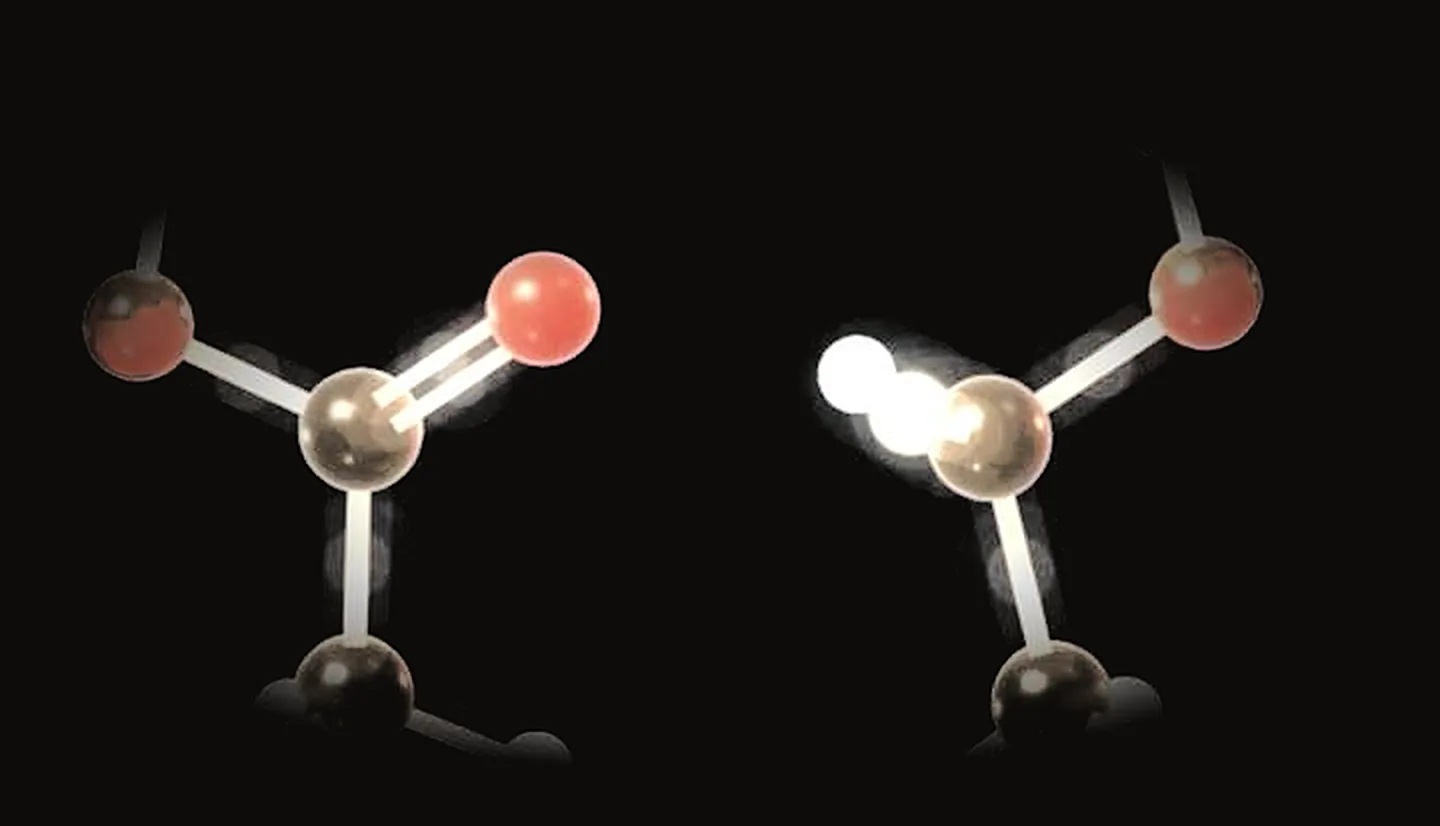
Acetic acid is about 100 billion times more acidic than ethanol.
Same O–H bond. In acetate the negative charge is shared by two oxygens; in ethoxide it sits on one. The more stable the conjugate base, the stronger the acid.
Acetic acid (pKa 4.8) is more acidic than phenol (pKa 10), which is more acidic than ethanol (pKa 16). What best explains why phenol is more acidic than ethanol?
Pick one. The red pen does the rest.
The deciding lineAn acid is stronger when its conjugate base is more stable; delocalizing a negative charge by resonance stabilizes the base.
Why C: In phenoxide, the negative charge on oxygen is delocalized over the aromatic ring by resonance; ethoxide's charge stays on oxygen. The more stable conjugate base makes phenol the stronger acid.
Why each choice fails
ARight effect, wrong mechanism: acidity here is explained by the stability of the conjugate base, not by hydrogen bonding of the acid.
BSays more than the data: only the O–H hydrogen is acidic; the ring C–H bonds are not.
CHolds: resonance-stabilized phenoxide.
DLook-alike terms: both acids donate from an O–H bond with the same oxygen atom; atom size differs only between elements.
Which of these compounds is the strongest base in water?
Pick one. The red pen does the rest.
The deciding lineAn amine is more basic when its nitrogen lone pair is more available: alkyl groups donate electron density, while delocalization into a ring or a carbonyl ties the lone pair up.
Why C: The ethyl group donates electron density to nitrogen, so ethylamine (pKa of its conjugate acid about 10.7) is a stronger base than ammonia (9.3). Aniline's lone pair is delocalized into the ring (4.6), and acetamide's into the carbonyl, so it is essentially not basic.
Why each choice fails
ADirection reversed: the phenyl ring pulls aniline's lone pair into resonance, which makes it a much weaker base than ammonia, not a stronger one.
BOne step short: ammonia is basic, but an alkyl group on nitrogen donates electron density and makes ethylamine more basic still.
CHolds: the most available lone pair belongs to ethylamine.
DLook-alike terms: acetamide has an NH₂ group but it is an amide, not an amine; its lone pair is delocalized into the C=O, and it is barely basic.
In a peptide, the bond between the carbonyl carbon and the nitrogen of the next residue is shorter than a typical C–N single bond, and rotation about it is restricted. What best explains these properties?
Pick one. The red pen does the rest.
The deciding lineIn an amide, the nitrogen lone pair is delocalized into the carbonyl π system, so the C–N bond has partial double-bond character, is shorter than a single bond and does not rotate freely.
Why C: Amide resonance shares the nitrogen lone pair with the C=O group. The C–N bond gains partial π character, so it is shorter than a single bond and rotation would break the π overlap; the peptide group is planar.
Why each choice fails
ARight effect, wrong mechanism: side chains are attached to the α-carbons and affect rotation about the bonds to those carbons; even glycine’s peptide bond, with no side chain, does not rotate.
BRight effect, wrong mechanism: hydrogen bonds between peptide groups stabilize helices and sheets, but they are weak and would not shorten the C–N bond; the bond is short and rigid even in an isolated amide.
CHolds: resonance between C=O/C–N and C–O−/C=N+ forms makes the C–N bond about a bond and a half; the π overlap keeps the six atoms of the peptide group in one plane.
DSays more than the data: that is only one resonance form; the real bond is a hybrid, between single and double, and the C=O keeps most of its double-bond character.
If it isn’t helping, reply to your receipt email, or DM @redpenprep on Instagram within 30 days and get every dollar back. No questions asked. Email support